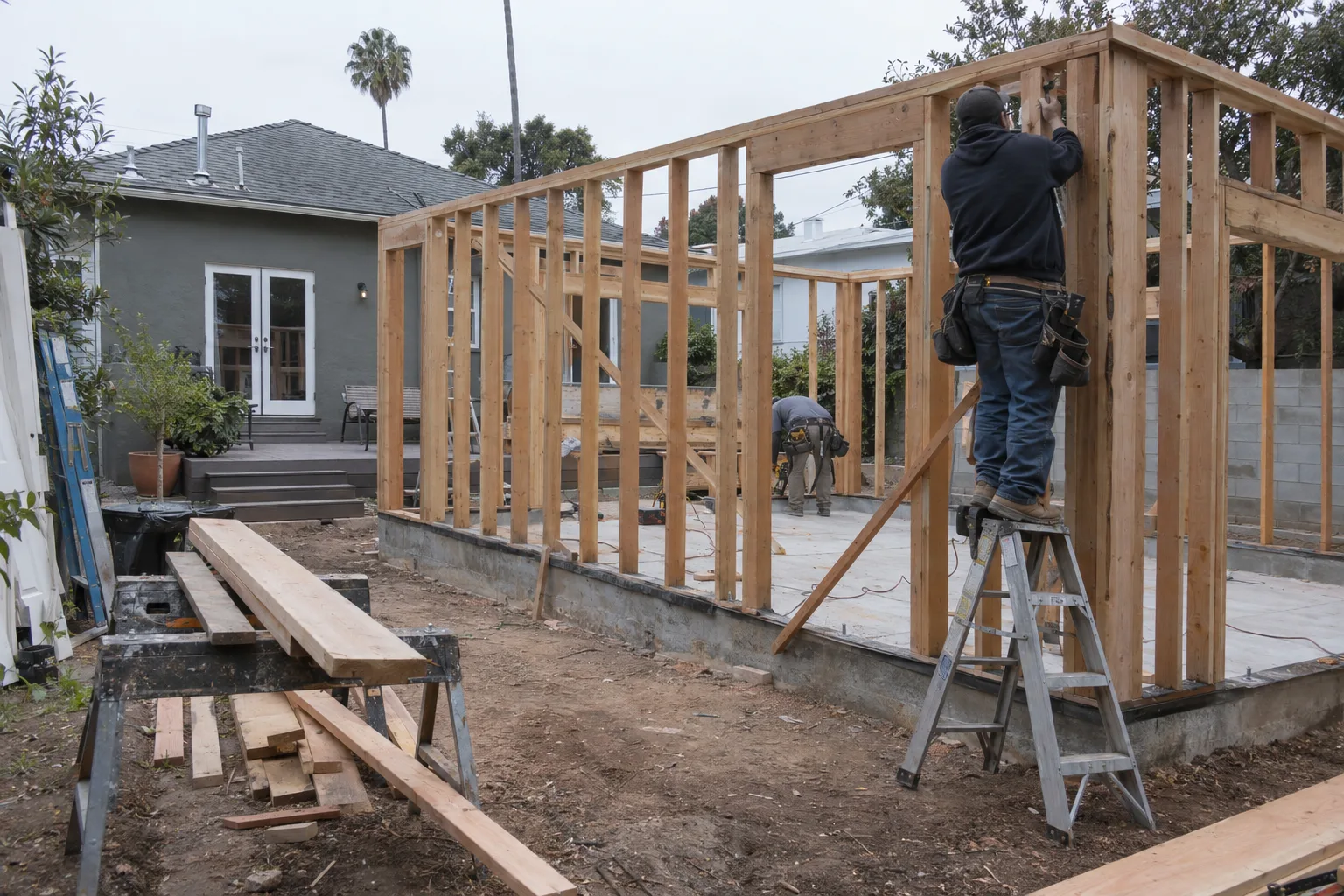
# Stone Set Right Holds Its Shape for Decades
Stonework and masonry built into the hardscape from the ground up - not applied after the fact.
What Skilled Masonry Actually Delivers on a Los Angeles Property
Skilled masonry delivers structure, longevity, and a surface that improves with age.
That outcome doesn't happen by accident. It happens because the bed was prepared correctly. Because the right mortar was chosen for the material. Because drainage was built in before the first stone was placed.
SNA Remodeling Hollywood handles stonework and masonry across Los Angeles as part of integrated hardscape construction. Stone is planned from the ground up - alongside footings, drainage, and surface prep - not added as a finish layer once everything else is done. That's the difference between masonry that holds its pattern for decades and masonry that needs to be reset within a few years.
Stone in LA Comes in More Than One Form - We Work With All of It
Los Angeles has more masonry vocabularies per square mile than almost any city in California.
River rock detailing on Craftsman bungalows in Pasadena. Limestone cladding on Beverly Hills estates. Stacked stone garden walls tucked into Silver Lake hillsides. Dry-stack fieldstone along property edges in West Hollywood, where the grade drops fast and a retaining wall has real structural work to do.
Each of those materials behaves differently under load and over time. River rock is round - it doesn't stack flat, so it demands a mortar bed that compensates. Limestone is porous in ways that affect how joints are tooled and sealed. Stacked stone relies on coursing - the deliberate horizontal layering of stone - to distribute weight and stay level.
Here's what most homeowners don't realize about stone selection: the material you choose isn't just an aesthetic decision. It's a structural one. We help clients understand that relationship before anything is ordered or set.
A Call We Often Get: "The Wall Looks Fine, But the Joints Are Separating"
Joint separation in masonry usually points to a foundation or drainage problem - not the stone itself.
I'm Liam Harris, founder of SNA Remodeling Hollywood. One of the most common calls we get goes something like this: a homeowner has a stone planter wall or a garden retaining wall that was installed a few years back. It looked solid when it was done. Now the mortar joints are opening up - not crumbling, just pulling apart - and they want to know if it can be fixed.
The honest answer is: it depends on what's underneath.
Masonry mortar and bonding - the system of mix ratios, joint depth, and cure conditions that holds stone in place - can only do so much. If the footing wasn't sized for the load, the wall will move. If drainage wasn't built into the wall cavity, water pressure builds behind the stone and pushes it forward. The joints open because the wall is shifting, not because the mortar was bad.
When we assess a situation like this, we start at the base. We look at how the footing was formed. We check whether there's gravel backfill and weep holes behind the wall. We read the pattern of the joint separation - because the direction and location of the gaps tells you where the movement is coming from.
Sometimes the fix is targeted. Sometimes the wall needs to come down and be rebuilt on a proper footing with drainage built in. Either way, understanding the cause is the only path to a fix that holds.
That's why we don't treat stonework as a finish trade. It's a structural trade that happens to look beautiful when it's done right.
How We Make Sure the Stone You Choose Performs the Way You Expect
Every stone surface we build is matched to its site conditions before a single piece is ordered.
A question we hear often: "I found a stone I love - can you use it for a retaining wall?"
The answer is usually yes. But we'll want to know a few things first. Where is the wall going? How much grade change is it managing? Is there irrigation nearby that will keep the soil saturated?
Stone is honest about its load conditions. A material that performs well as a decorative face on a low planter may not be the right choice for a wall holding back six feet of hillside. We work through those variables with clients early - before anything is priced or ordered.
The goal is simple: you get the stone you want, set in a way that keeps it looking that way.
From Footings to Finished Face: How Every Stone Surface Gets Built
Every masonry project starts below grade - not at the surface.
Our standards for stonework and masonry:
- Footing and base preparation first.Size and depth matched to the wall's load and the soil conditions on site.
- Drainage integrated before stone is set.Gravel backfill and weep holes on any wall managing soil or water pressure.
- Mortar mixed for the material.Limestone, river rock, manufactured stone, and fieldstone each call for different mix ratios and joint depths.
- Stone coursing planned before placement.Pattern and level established dry before mortar is introduced.
- Joints tooled and cured properly.No fast-track dry time. Mortar cures at the rate the material requires.
- Final surface checked for level, alignment, and joint consistency.Anything that doesn't pass gets reset.
Three passes on every joint. Not one.
Setting Stone the Right Way - Bed, Course, Joint, and Cure
Masonry execution follows a fixed sequence - and every step depends on the one before it.
Reading the Site First
Before any stone is set, we read the site. Slope. Soil type. Proximity to irrigation or drainage lines. Existing footings if this is a repair or extension project. This is where we determine footing depth and drainage strategy. In Los Angeles, hillside properties - especially in West Hollywood and Silver Lake - often sit on decomposed granite or clay-heavy soil. Both affect how footings are formed and how much movement to plan for.
Setting in Sequence
Stone coursing - the deliberate horizontal layering that gives a wall its structural integrity and visual rhythm - is laid out dry first. We establish level and pattern before mortar is introduced. Then we set in lifts, letting each course gain partial cure before the next is placed. On larger walls, we build in control joints - vertical breaks in the wall that accommodate natural expansion - to prevent cracking.
Every joint is tooled to the depth the material requires. Shallow joints hold moisture. Joints that are too deep expose the bond line. Getting this right is a detail most people never see - but it's what determines whether the wall looks the same in fifteen years.
Checking the Work
Once the masonry is complete and cured, we check alignment, joint consistency, and drainage function. Any wall with integrated drainage gets a water test before we sign off. Stone that has shifted during cure - it happens, rarely, on complex courses - gets reset. We don't leave the site until the work holds.
Stonework and Masonry Across Greater Los Angeles
SNA Remodeling Hollywood dispatches from 1433 N Martel Ave in Los Angeles.
We serve stonework and masonry clients throughout the Greater Los Angeles area. That includes West Hollywood, Beverly Hills, Silver Lake, Pasadena, Santa Monica, Burbank, Studio City, Culver City, and the San Fernando Valley. We also serve Glendale, Encino, Sherman Oaks, and communities further out including Long Beach, Torrance, and Redondo Beach.
Ready to Add Stone to Your Property? Here's How to Start
Call or message SNA Remodeling Hollywood and describe the project.
We'll talk through the site, the material, and what you're trying to accomplish. From there, we'll assess the space and give you a clear picture of what the work involves. Reach us at +1 323-761-0179 or by email at info@snaremodeling.com. Stone projects in Los Angeles are what we do - let's build something that lasts.