What Roof Maintenance Actually Covers
Roof maintenance is scheduled, preventive care for an existing roof - not a replacement.
It includes surface cleaning, debris removal, inspection of flashing integrity (the metal or sealant junctions around vents, chimneys, and edges where water typically enters first), and minor sealant repairs. The goal is to find and fix small vulnerabilities before they let water through.
Here's what most homeowners don't realize about roof maintenance: the surface you can see is rarely where the damage starts. Water intrusion - moisture penetrating through compromised roofing into decking, insulation, or framing below - usually begins at the seams. The joints, edges, and transitions. A maintenance visit targets exactly those points.
For Los Angeles homes, this service fits cleanly between seasons. Before the rains arrive. After the long dry stretch does its work.
How Los Angeles UV Cycles Wear Roofs Faster Than Most Climates
Southern California sun breaks down roofing materials faster than most people expect.
Los Angeles logs more than 280 sunny days a year. UV exposure - the ultraviolet radiation that drives roofing material degradation on asphalt, tile, and membrane surfaces - is relentless here. Sealants shrink. Caulking around vents pulls away from the surface. Flashing edges loosen.
Then the wet season arrives in December through March. The gaps that formed over summer and fall become entry points. By the time interior staining shows up, water has already soaked through the decking - the structural substrate beneath the surface layer - and into insulation.
Homes in the Hollywood Hills and along the slopes above Sunset Boulevard face an added challenge. Roof pitch and compass orientation affect how much direct sun each surface receives. Some exposures degrade noticeably faster than others.
Preventive maintenance - scheduled inspection and minor correction before failure - is the standard response to this climate pattern. One visit per year, timed before the rainy season, covers most residential roofs in this area.
A Call We Often Get After the First Hard Rain of the Year
The most common request we get comes after the very first significant rain.
I'm Liam Harris, founder of SNA Remodeling Hollywood. A call we often get starts the same way: the homeowner noticed a water stain on their ceiling after the first real storm of the season. They assumed the roof was fine - no visible damage, no missing tiles, nothing obvious.
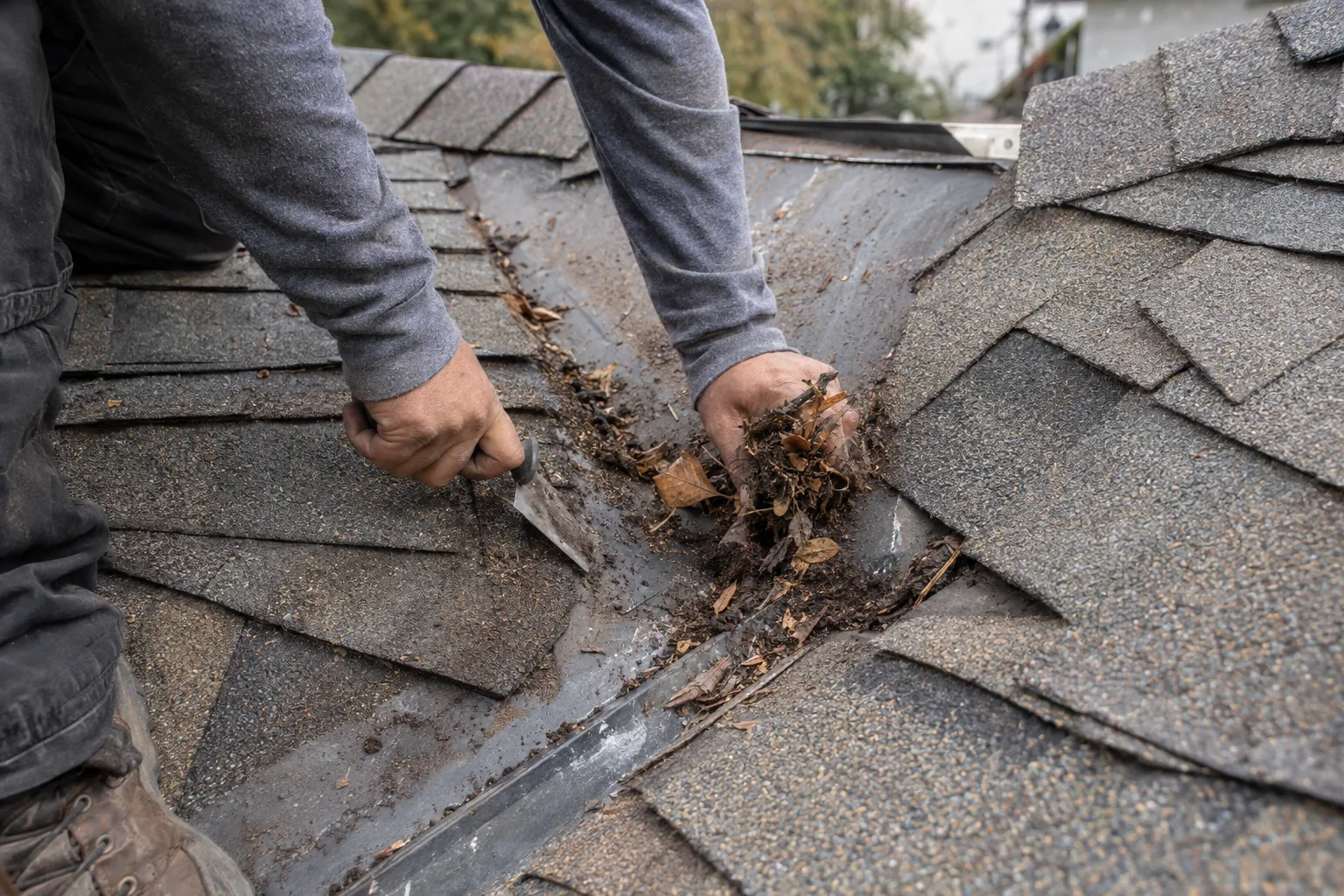
When we get up there, we usually find the same pattern. Debris accumulation - leaves, organic matter, and particulate buildup - has settled into the roof's low points and valleys. That material holds moisture against the surface for weeks after rain. Sealant around a vent stack or chimney base has pulled back. Sometimes flashing at a wall junction has lifted slightly.
None of these are dramatic. None would alarm a casual observer from the ground. But they add up over one dry season. The rain doesn't cause the problem - it reveals one that's been building for months.
The cost difference between a maintenance visit before that rain versus replacing water-damaged decking and ceiling drywall after it is significant. The work we do during a maintenance visit is straightforward. The work that follows water intrusion is not.
This is why we built roof maintenance into our full construction scope. Our crew understands what lives under the surface. When we find something that goes beyond surface wear, we don't refer it out. We assess it directly and tell you exactly what it is.
Your Roof's Surface Is Only Part of the Story
What's underneath the surface layer matters just as much as what's on top.
Roof decking - the structural substrate beneath the roofing material - is the layer that fails when surface protection breaks down. Once water gets through, decking absorbs moisture and begins to soften. Insulation directly below it loses its thermal performance. Interior framing can follow.
A maintenance visit looks at the full picture: surface condition, flashing integrity, sealant condition, debris load, and drainage at valleys and gutters.
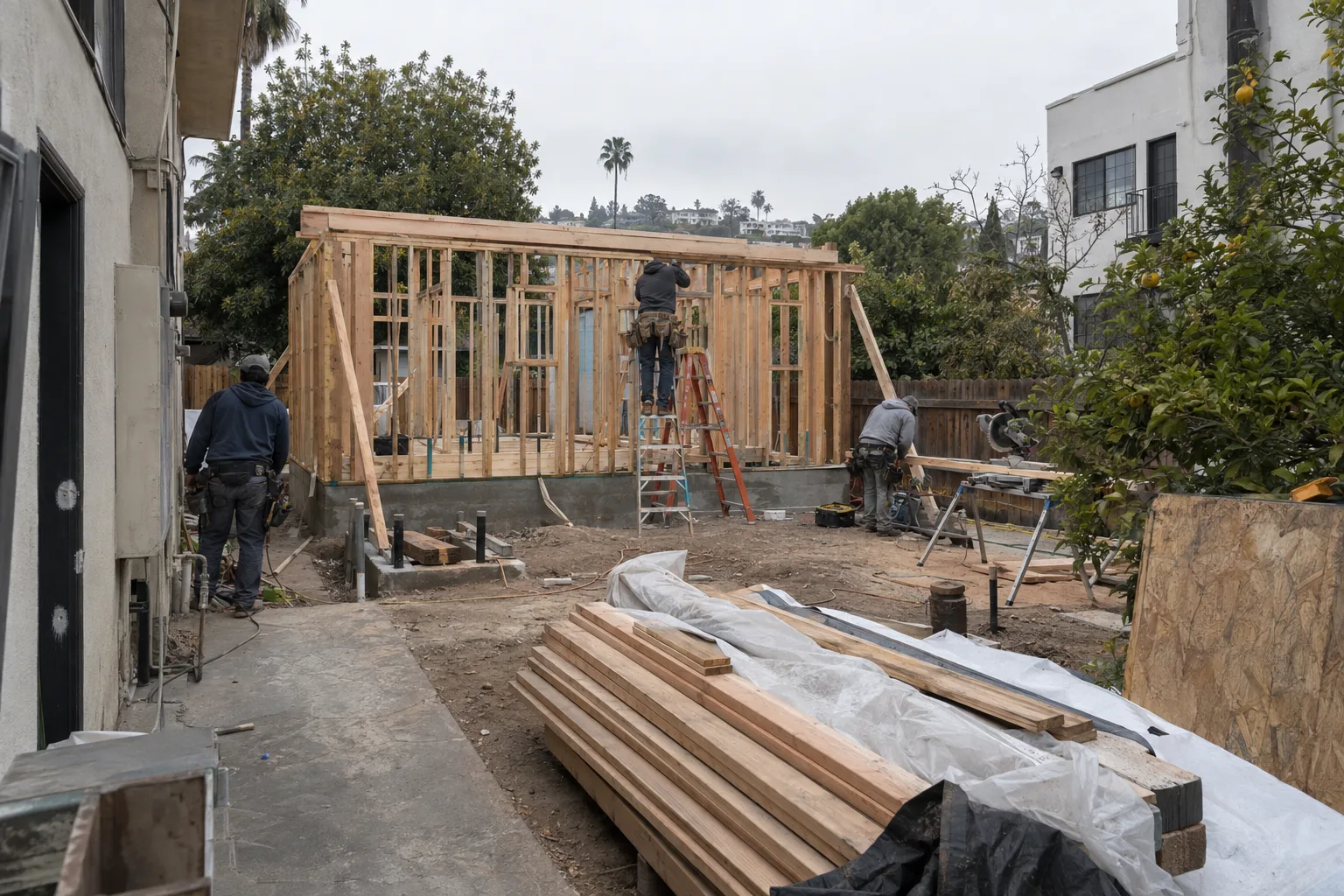
SNA Remodeling Hollywood's crew handles full construction scopes - framing, insulation, structural work. That means the team doing your roof maintenance understands what's underneath. If a maintenance inspection turns up something that requires deeper attention, you get a direct assessment. One visit. One crew. Clear answers.
How We Inspect, Clear, and Seal an Existing Roof
Every maintenance visit follows a consistent standard - surface to seam to drainage.
Our approach to roof maintenance in Los Angeles includes:
- Full surface walk:Check roofing material condition across all planes - tile, asphalt, or membrane
- Flashing inspection:Every vent, chimney, skylight, and wall junction examined for lift, gap, or sealant failure
- Debris removal:Leaves, organic matter, and particulate cleared from valleys, gutters, and low points where moisture collects
- Sealant assessment:Identify shrinkage or cracking at all sealed edges - a common failure point in Southern California's dry-heat cycles
- Drainage check:Confirm water has a clear path off the roof before the wet season begins
- Condition report:Clear summary of what we found, what was addressed, and what to watch
Three coats of sealant where needed. Not one.
From First Assessment to Final Walkthrough: Our Maintenance Sequence
Our maintenance sequence moves in a specific order - because the order matters.
Diagnostics
We start from the ground. Before going up, we look for visible signs of surface wear, moss growth, or material displacement. Then we walk the surface methodically - peak to valley, field to edge. Flashing integrity is checked at every transition point. Sealant shrinkage is measured visually and by touch - dried, cracked sealant separates clearly from material that still has flex.
Implementation
Debris removal comes first. Valleys and gutters are cleared before any sealant work begins. Moisture trapped under debris affects how sealant bonds. We work dry surfaces. Sealant is applied at all identified failure points - vent boots, chimney bases, flashing edges, and any cracked tile joints. Where flashing has lifted, it's re-secured and sealed.
Post-Service Check
Before we leave, we walk the roof a second time. Every sealed point is checked for coverage and adhesion. Drainage paths are confirmed clear. The homeowner gets a plain-language summary: what we found, what we did, and what condition the roof is in heading into the wet season. No technical shorthand. Just a clear picture of where things stand.
Los Angeles Neighborhoods We Maintain Roofs In
SNA Remodeling Hollywood serves residential roofs across Greater Los Angeles.
Our crew covers Los Angeles, West Hollywood, Hollywood, Silver Lake, Culver City, Beverly Hills, Burbank, Glendale, Santa Monica, Studio City, Sherman Oaks, Van Nuys, Encino, Pasadena, Long Beach, and dozens of additional communities throughout the region.
Our dispatch location at 1433 N Martel Ave puts us within close reach of the Hollywood Hills and surrounding neighborhoods. We extend across the full service area - including the San Fernando Valley, the Eastside, and South Bay.
Schedule Your Roof Maintenance Visit in Greater Los Angeles
A single maintenance visit before the wet season is the most direct way to protect your roof.
Call SNA Remodeling Hollywood at +1 323-761-0179 or email info@snaremodeling.com to book your inspection. You can also learn more about related services including roof remodeling and high-density insulation and moisture control if your maintenance visit reveals something that needs deeper attention.
Schedule before the rains arrive. That's the window that counts.