What Drywall Installation and Repair Covers in Los Angeles
Drywall installation and repair in Los Angeles covers far more than nailing up sheets.
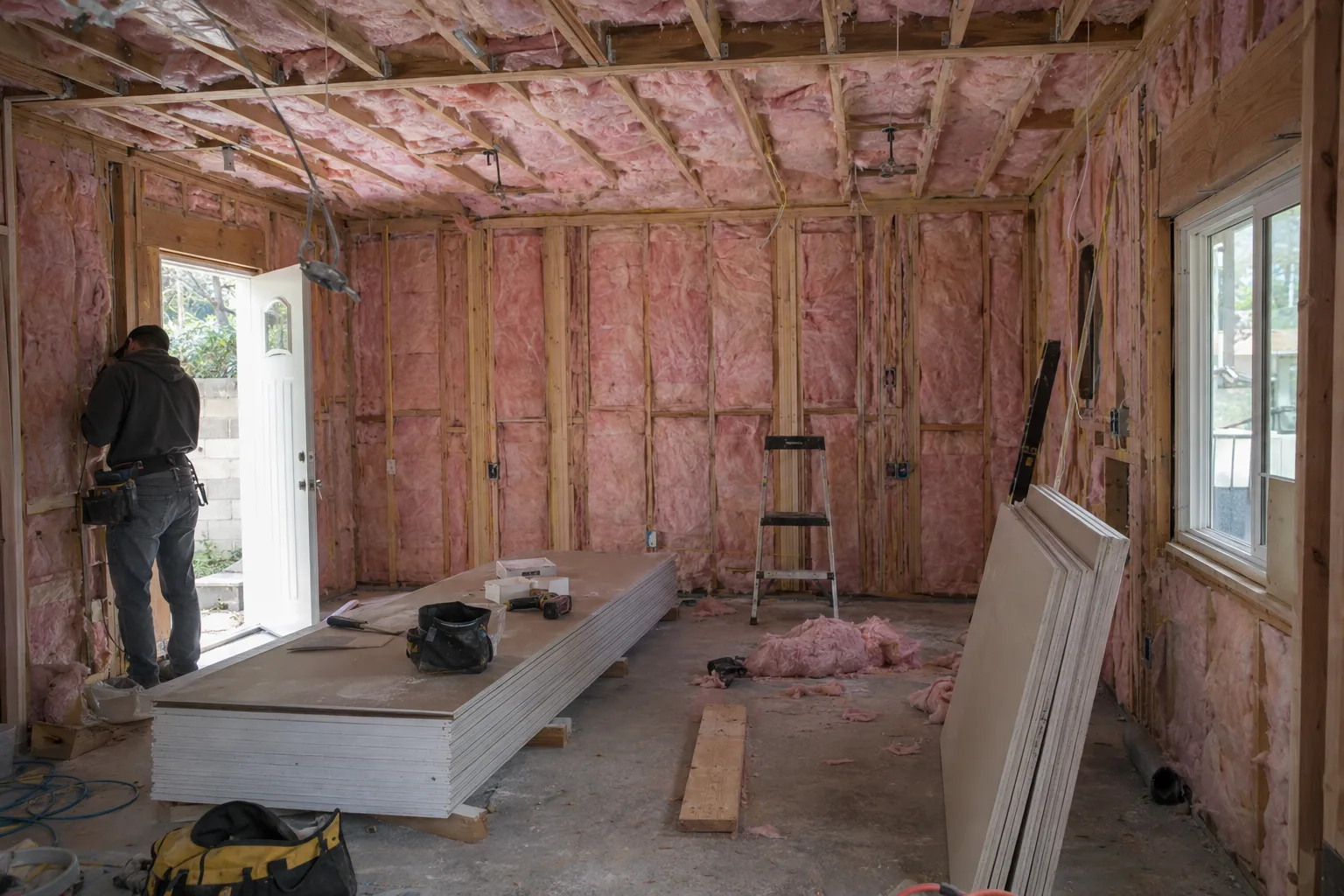
Drywall - the gypsum board panels used for interior walls and ceilings - gets installed in layers. You hang the sheet. You tape and mud the joints. You skim coat the surface. Each step has to be right before the next one begins. Skip a step, rush a coat, or miss a seam, and the wall tells you later - usually right after the paint goes on.
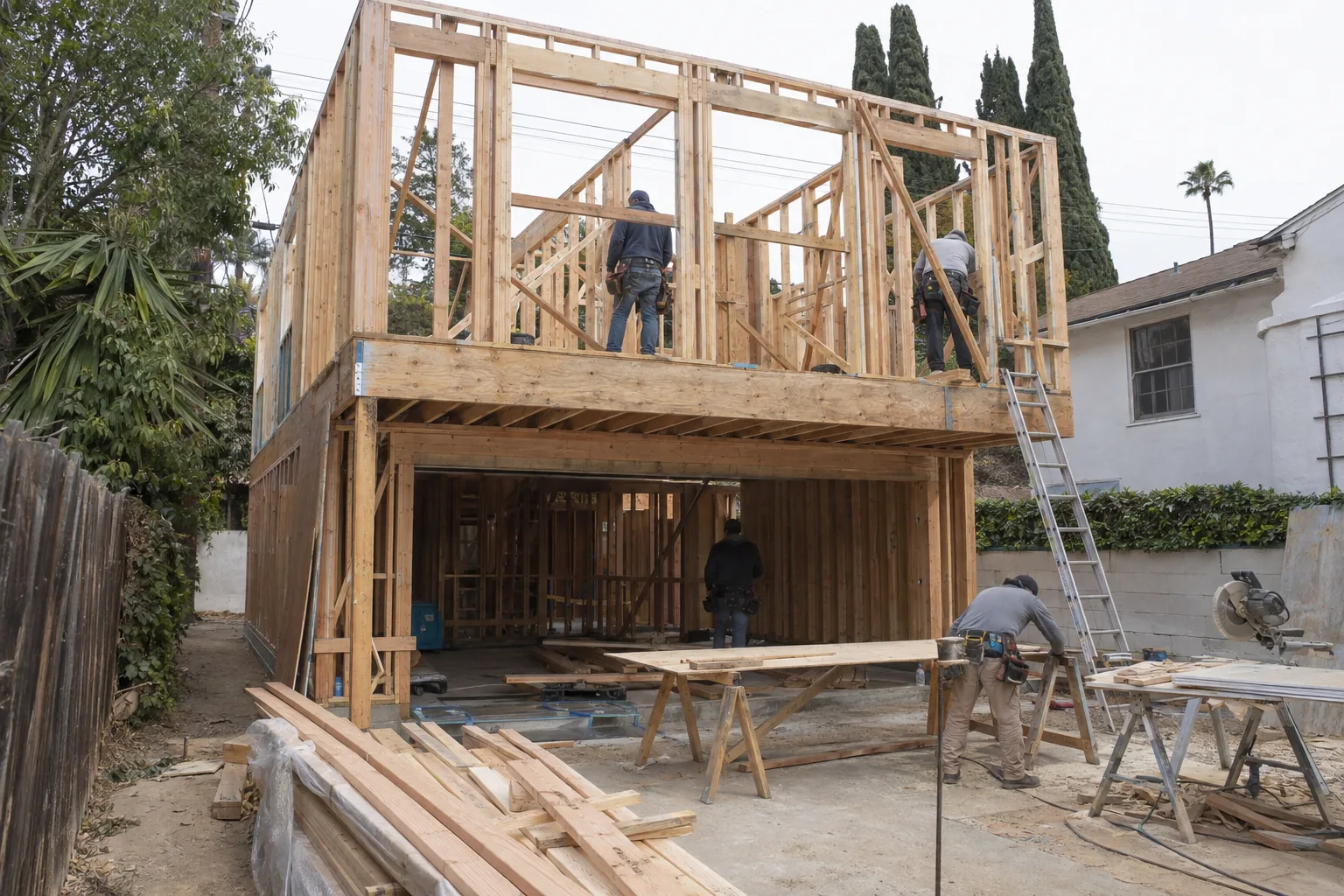
At SNA Remodeling Hollywood, we handle drywall as part of full interior remodeling, room additions, and renovations. We also take on repair work as a standalone service. That means patching holes, filling cracks, restoring damaged sections, and refinishing surfaces ahead of paint.
The finish goal is the same either way. Every surface leaves our crew paint-ready. That's the threshold - not "looks okay from a distance" - actually ready for primer, paint, and the full view that comes with a finished room.
How Los Angeles Homes Create Ongoing Drywall Work
Los Angeles homes move. That movement shows up on the walls.
Seismic settling - the gradual structural shift that happens in Los Angeles homes due to minor earth movement over time - puts real stress on interior finishes. It's not dramatic. It's slow. A hairline crack at the corner of a window frame. A seam ridge that wasn't there two years ago. A fastener pop - when a drywall screw pushes back through the surface as the wood behind it shifts - appearing mid-wall without explanation.
The 90046 area sits in a zone with older residential construction. Many homes in West Hollywood, Hollywood Hills, and Silver Lake were built in eras when drywall tolerances were looser and framing lumber was greener. That combination means more joint movement over time.
Here's what many Los Angeles homeowners don't realize about their walls: the wet season accelerates this. Moisture pulls at the paper tape behind older joints. When it dries, the bond loosens. By the time a homeowner calls about a crack, the underlying joint may have separated slightly - and patching the surface without addressing the tape won't hold.
That's the local reality. And it's why interior drywall repair service in this area requires more than a bucket of joint compound.
A Call We Often Get Before Repainting Starts
The most common call is about walls that looked fine until the old paint came off.
I'm Liam Harris, founder of SNA Remodeling Hollywood. Here's a situation we walk into regularly in Los Angeles.
A homeowner is ready to repaint. The walls looked good with the old color on them. Then the painter starts preparing the surface - or just shines a work light at a low angle across the wall - and suddenly the imperfections are visible. Ridges. Tape lines. Old patches that were feathered but not finished. A skim coat that stopped two inches short of a corner.
This happens most often in West Hollywood and Hollywood Hills properties that were partially renovated at some point. Someone did drywall repair on half the wall but didn't finish the full surface. Or they patched a hole but didn't match the texture of the surrounding area.
We get called in to re-establish the surface. That means finding every ridge, every seam that's lifting, every fastener pop, and every old patch that didn't hold. We assess what's repairable through spot work and what needs a full skim coat - a thin final layer of joint compound applied across the entire wall to create a smooth, even surface before paint.
The result is a wall that looks the same from every angle. Under flat paint, under light, in daylight.
Taping and mudding - the process of covering drywall joints with tape and joint compound - is not glamorous work. But it is the work that makes everything else look right.
Why the Finish Level Matters More Than the Hang
The hang takes hours. The finish takes days - and it's where quality is decided.
Finish levels in drywall work range from Level 1 (tape only, no finishing - used in utility spaces) up to Level 5 (a full skim coat applied over the entire primed surface for a flawless finish). Most residential interiors in Los Angeles are finished at Level 4 or Level 5 before painting.
Level 4 means joints are fully embedded, two coats of compound over the tape, one coat over fasteners, and corners finished clean. Level 5 adds a skim coat - that thin final layer - over the entire surface. It removes any variation in texture or porosity that would show under flat or eggshell paint.
For rooms being painted in flat or matte sheens, Level 5 is the right call. Flat paint reveals surface variation more than any other sheen. What looks smooth under a primer can look irregular under a flat topcoat.
We match the finish level to what the room actually needs. We also match the existing texture in repair zones - if the surrounding wall has a light knockdown or an orange peel texture, the repair matches it. Invisible repair is a specific skill. Patch and paint over mismatched texture, and you've traded one flaw for another.
From the First Sheet to the Final Skim Coat
Every stage of drywall installation follows a defined sequence - no shortcuts.
Our drywall installation and repair work follows a consistent standard at every stage:
- Sheet selection and cuttingPanels sized and cut before hanging, not trimmed after the fact
- Fastener patternScrews set below the surface without breaking the paper face; consistent spacing per manufacturer spec
- Taping and muddingPaper tape embedded in compound at joints, mesh tape used where appropriate, full coverage with no voids
- Coat timingEach coat of joint compound is allowed to fully dry before the next is applied; no forced drying that causes shrinkage
- FeatheringEdges blended wide enough that the compound becomes invisible at the transition
- Skim coatApplied across the full surface where needed, sanded to a consistent profile
- Final inspectionSurface checked with raking light to catch any ridge, bubble, or missed seam before the crew leaves
This is how we define drywall finishing before painting. Not a checklist - a standard.
How Each Phase Connects - Framing, Drywall, Prep, Paint
Good drywall starts with what happened before the first sheet went up.
Framing and Inspection
Drywall can only be as flat as the framing behind it. Before any sheet goes up, we check the framing for crown, bow, or twist in the studs. A bowed stud creates a wave in the finished wall that no amount of compound fixes. We address framing issues before we hang - not after.
In Los Angeles homes with older framing, this step matters. Wood that's been through decades of dry and wet seasons can shift significantly from its original position.
Hanging and Fastening
Sheets go up in the correct orientation for the wall height and layout. Seams are staggered where possible. Fasteners are set consistently - deep enough to dimple the surface, shallow enough to leave the paper face intact.
Taping, Mudding, and Skim
This is where patch and repair drywall work and new installation converge on the same process. Whether it's a new wall or a repaired section, the sequence is the same. Tape first. Compound in coats. Skim where the finish level calls for it. Dry completely between applications.
One practical note: in Los Angeles, particularly during dry Santa Ana conditions, compound can dry faster than expected. That affects how far you spread, how you feather edges, and how quickly you move. Working interior drywall in high-heat conditions requires adjusting the process - not just following a procedure written for moderate climates.
Surface Prep and Handoff
When the surface is done, it's primed and ready for your painter or paint crew. We don't hand off a wall that needs more work. That's the standard - and it doesn't move.
Los Angeles Neighborhoods Where We Handle Drywall Work
We serve projects across Los Angeles and the surrounding area - no long scheduling gaps.
Our drywall work covers West Hollywood, Hollywood, Silver Lake, Culver City, Beverly Hills, Burbank, Santa Monica, Glendale, Studio City, Sherman Oaks, Van Nuys, Encino, and the broader San Fernando Valley. We also serve neighborhoods and cities across the Greater Los Angeles Area. Our crews are based on North Martel Avenue in Los Angeles - close to where most of this work comes from.
Ready to Move Forward? Here's How to Start
Getting your walls finished to paint-ready starts with one call or message.
Call SNA Remodeling Hollywood at +1 323-761-0179 or email info@snaremodeling.com. Tell us what you're working with - a repair, a full installation, or a surface that needs to be restored before paint. We'll follow up to talk through the project and schedule a time to look at it in person.