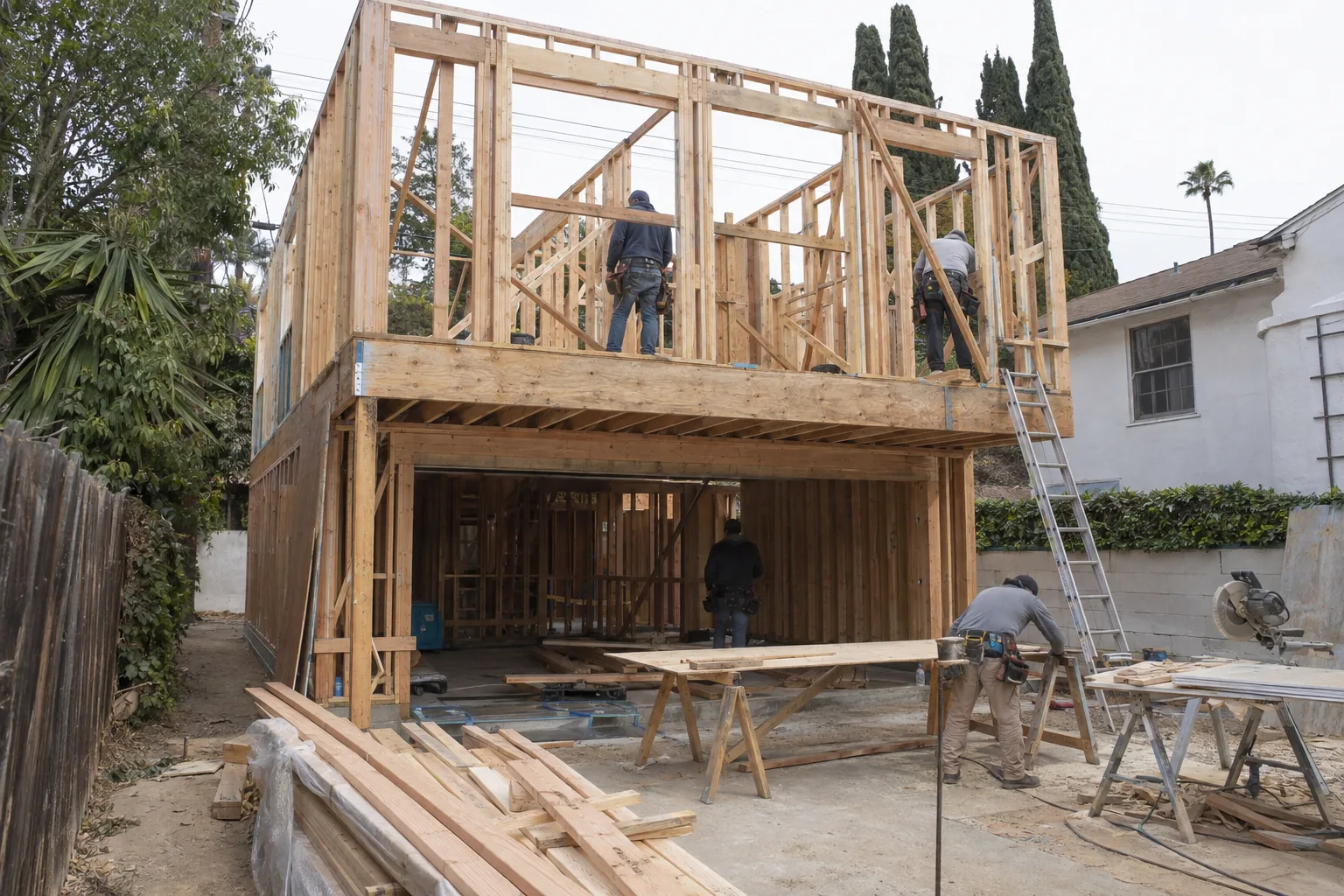
The same crew removing the old structure builds what replaces it.
What Demolition Actually Means on a Construction Project
Demolition is the planned first phase of construction - not a separate job.
At SNA Remodeling Hollywood, demolition is built into the project plan from day one. The crew clearing the site is the crew building what replaces it. That means the removal decisions are made with the full construction plan already in view.
Interior demolition - selective removal of walls, flooring, ceilings, and finishes inside existing homes - is the most common type we handle. Structural removal involves taking down load-bearing or framing elements and requires a different approach. Site preparation, the phase that demolition feeds directly into, depends entirely on how cleanly the teardown is executed.
Every type starts the same way. Scope first. Then execution.
How Los Angeles Homes Shape Every Teardown Decision
Los Angeles residential construction is layered in ways that directly affect every demolition plan.
A Silver Lake bungalow built in the 1940s often has two or three generations of finish work sitting on top of the original structure. Old drywall over older plaster. Subfloor patched in sections over decades. Framing modified during mid-century additions.
That history matters before a single tool is lifted. In West Hollywood and Hollywood Hills, hillside properties add slope and soil conditions to the equation. In the San Fernando Valley, properties being converted to ADUs require selective demolition that preserves the slab and framing worth keeping.
Los Angeles city code shapes the process as well. Certain neighborhoods have specific requirements around debris removal, utility disconnection sequencing, and setback clearances before structural work begins. Our crew operates across all of these areas and plans accordingly before the project starts.
A Call We Often Get Before a Renovation Begins
The most common demolition question we hear isn't about tearing things down - it's about what to keep.
I'm Liam Harris, founder of SNA Remodeling Hollywood. A call we often get goes something like this: a homeowner in Culver City or Silver Lake is planning a full kitchen remodel or a garage-to-ADU conversion. They've got a vision for what the space should look like. But they've also got an older home, and they're not sure what's behind the walls.
The conversation usually starts with "can you just take out the kitchen?" By the time we've walked the space, the scope looks different. There's a non-structural wall that can come out cleanly and open the floor plan. There's a ceiling section hiding outdated wiring that needs addressing before new framing goes in. There's a subfloor section patched incorrectly that will affect how the new floor installation sits.
This is exactly why demolition should be scoped by the same team doing the build. We're not removing what's easy. We're removing what the new plan requires - and preserving everything the build depends on.
In Los Angeles, older residential stock means discoveries are common. We plan for them. When we find something during demolition that changes the scope, we address it before the build phase begins. Construction sequencing - the ordered progression from teardown to build - stays intact.
That's the difference between demolition as a separate job and demolition as Phase One.
Your Site Will Be Ready When the Build Crew Arrives
Clean handoffs between phases keep your project on schedule.
Because the same crew handles both phases, the demolition scope is already defined around the build plan. We know what the framing crew needs. We know what the concrete slab requires. We know what surface the floor installation has to start from.
Nothing gets left behind that creates a problem for Phase Two. The site is cleared, debris is removed, and the build surface is ready. That's the handoff we deliver on every project.
How We Sequence a Demolition From Scope to Clean Site
Every demolition project follows a defined order - scope, selective removal, and site clearance.
Our process for demolition services in Los Angeles:
- Scope DefinitionWe review the full construction or renovation plan before anything comes down. Interior demolition, structural removal, and site prep needs are mapped against the build requirements.
- Utility CoordinationWater, gas, and electrical lines are identified and accounted for before any structural removal begins.
- Selective Interior DemolitionWalls, ceilings, flooring, and finishes are removed according to the build plan. What the new structure needs is preserved. What it doesn't need is cleared.
- Structural Removal Where RequiredLoad-bearing elements and framing that must come down are handled with the replacement structure already planned.
- Debris RemovalThe site is cleared completely. No pile left for the next phase to work around.
- Surface Prep HandoffThe site is reviewed against build requirements before the next phase begins.
What Happens on Demo Day
Demolition day is organized before it starts - not improvised once the crew is on site.
Before Work Begins
Before work begins, we walk the full scope with the project lead. Utility locations are confirmed. The removal sequence is established. Any sections that require extra care - older plaster, modified framing, sections near structural elements - are marked.
This step is not skipped. Los Angeles residential construction presents enough variables that a walkthrough before demo prevents complications during it.
Removal in Sequence
Selective demolition - the targeted removal of specific rooms, finishes, or structural elements - proceeds in order. Interior demolition moves from ceiling to floor in most cases: ceiling finishes, wall finishes, flooring, then any framing scheduled for removal. This order keeps debris contained and reduces the chance of secondary damage to sections that are staying.
Structural removal follows a separate sequence based on what's load-bearing and what the replacement framing requires.
Site Clearance and Handoff
Once demolition is complete, the site is cleared of all debris from the removal process. The remaining structure is reviewed for anything that affects the build plan. Any discoveries - unexpected framing conditions, subsurface issues, material differences from what was expected - are documented and addressed before Phase Two begins.
The build crew arrives to a clean site. That's the standard.
Los Angeles Demolition Service Coverage
We serve properties across the Greater Los Angeles Area and beyond.
SNA Remodeling Hollywood handles demolition projects across Los Angeles, West Hollywood, Hollywood, Silver Lake, Culver City, Beverly Hills, Burbank, Glendale, and Santa Monica. We also serve Studio City, Sherman Oaks, Van Nuys, Pasadena, Encino, Torrance, Long Beach, and communities throughout the San Fernando Valley. See our full service pages for Beverly Hills, Santa Monica, Burbank, Pasadena, Long Beach, and the San Fernando Valley.
Ready to Clear the Way? Here's How to Start
Contact SNA Remodeling Hollywood to scope your demolition project.
Demolition is Phase One. Getting it right determines how every phase after it goes. Call us at 323-761-0179 or email info@snaremodeling.com to talk through your project. Tell us what you're planning to build, and we'll scope the removal around it. We serve Los Angeles and the surrounding Greater LA Area.