What a Full Bathroom Remodel Actually Covers
A complete bathroom remodel in Los Angeles means rebuilding the room from the substrate out.
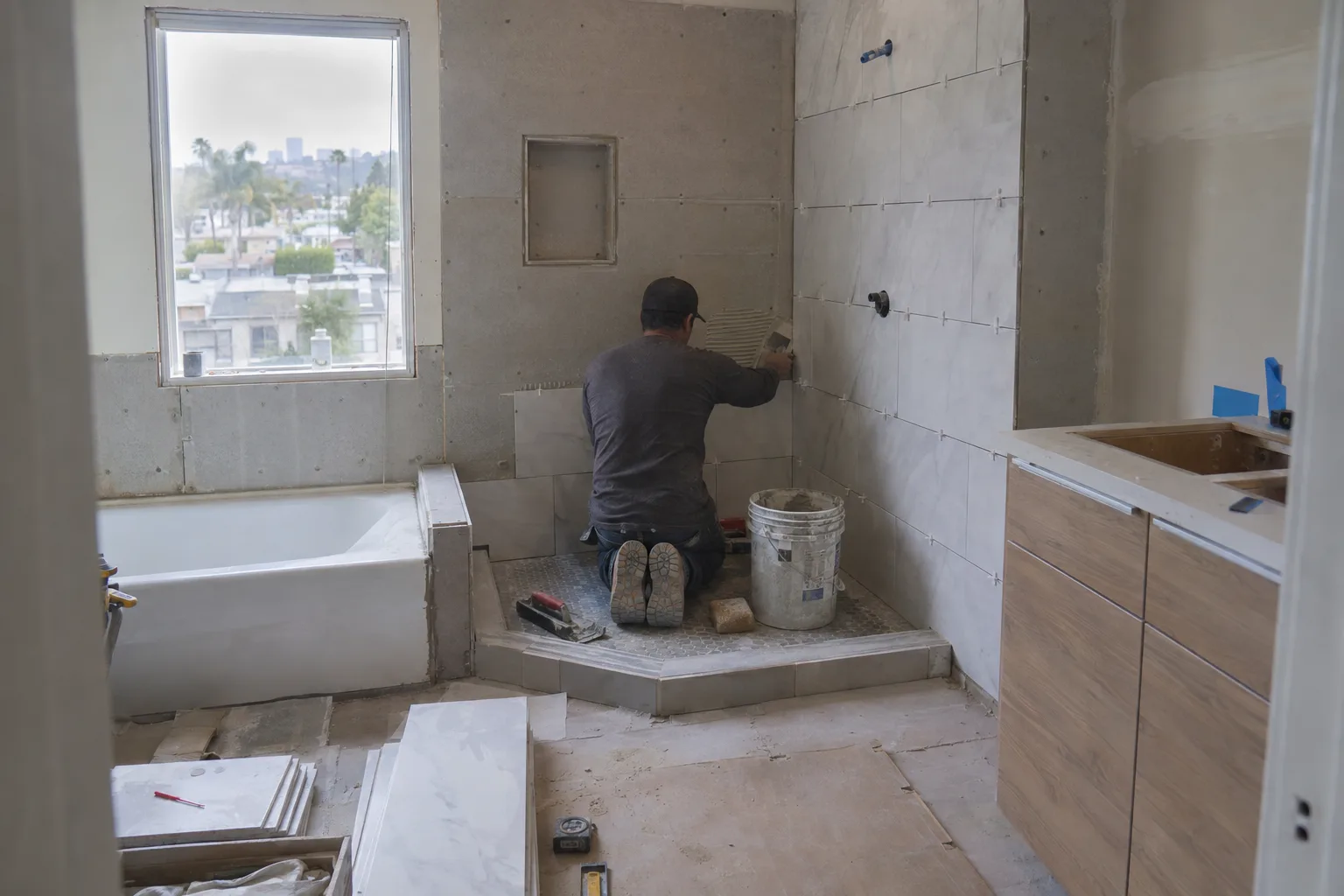
It starts with full demolition - removing existing tile, fixtures, drywall, and flooring down to the studs and subfloor. From there, the crew installs moisture-resistant board (the wall substrate - a cement or fiber-cement panel that goes behind tile in wet areas, unlike standard drywall which absorbs water), new floor and shower tile, updated fixtures, and fresh drywall and paint throughout.
Bathroom tile installation - meaning floor tile, shower surround, and decorative accent work - is the most visible part of any remodel. What holds it all together is the work underneath: proper substrate, a sound subfloor, and correct waterproofing at the wet-area transitions.
A bathroom renovation in Los Angeles also includes fixture replacement - swapping out toilets, vanities, faucets, and showerheads for function and updated style. SNA Remodeling Hollywood handles every one of those stages with one in-house crew. No subcontractors. No gaps between trades.
Older Los Angeles Homes and What Their Bathrooms Need
Los Angeles homes built before 1980 have bathrooms that were never designed for today's water use.
The Fairfax corridor, Silver Lake, and the hillside neighborhoods above Sunset all contain dense concentrations of residential housing from the 1940s through the 1970s. Those bathrooms were built with standard drywall behind tile - not cement board or moisture-resistant materials. After decades of daily use, that substrate breaks down.
Here's what most homeowners in Los Angeles don't realize about pre-1980 bathrooms: the tile on the wall often looks fine right up until the day you pull it. Behind it, the drywall has been softening for years. The subfloor - the structural layer beneath the tile - can look solid from the top while the wood underneath has absorbed moisture at the edges, especially near the toilet base and shower threshold.
SNA is based on Martel Avenue, just minutes from West Hollywood and the Fairfax district. The crew works in these neighborhoods regularly. That proximity matters when you're dealing with housing stock this specific.
From the field
A Call We Often Get From LA Homeowners
The bathroom looks dated, but the real issue is usually what's been going on underneath.
I get calls from homeowners in Hollywood, Culver City, and Silver Lake who describe the same situation. The grout is cracking. One or two tiles near the shower base feel soft underfoot. The vanity is original - maybe from 1965 - and the faucet corrodes every few years. They want to update the look, but they're not sure how deep the project needs to go.
When I walk the room, I always check the floor first. A soft spot near the toilet or at the shower threshold usually means the subfloor has taken on water at some point. In pre-1980 construction, that's not unusual. The original waterproofing wasn't built for this level of daily use.
The good news is that once you're already pulling tile and drywall, the subfloor repair adds relatively little to the scope. You're already in there. Addressing it while the room is open is the right call. Tiling over a compromised floor means the new tile won't last - and that's a problem worth solving now.
After we sort the substrate, the rest of the remodel moves in order: new moisture-resistant board, tile, fixtures, drywall, paint. That sequence matters. Each stage has to be complete before the next one begins. When one crew handles all of it, the transitions stay clean and nothing gets assumed between trades.
We've been doing this work in Los Angeles since 2020. The homes in this part of the city are specific. They reward a crew that knows what to look for before the first tile goes up.
How We Keep the Work on Track From Day One
Bathroom remodel projects stay on track when scope is confirmed before demolition begins.
Before the first wall comes down, the team walks the room and confirms what the demo will reveal. That means checking the subfloor condition at the wet-area perimeter, assessing the existing ventilation - bathroom ventilation is the exhaust fan system that pulls humidity out of the space, something many older Los Angeles bathrooms lack entirely - and identifying any framing issues at the walls.
Scope changes mid-project are usually the result of surprises that a proper pre-demo review would have caught. SNA's process front-loads the assessment so the crew isn't making decisions under the tile saw.
Every stage is handled by the same in-house team. The people who carry out the demolition scope - the full removal of existing tile, fixtures, drywall, and flooring before new construction begins - are the same people who build the new bathroom. That continuity keeps quality consistent from the rough work through the finish coat.
From First Demolition to Final Coat of Paint
SNA holds every stage of the bathroom remodel to the same standard - structural and cosmetic.
- Full demolition scopeall tile, fixtures, drywall, and flooring removed before any new work begins
- Subfloor inspection and repairchecked at wet-area edges; soft or damaged sections are replaced before substrate goes in
- Moisture-resistant board installationcement or fiber-cement substrate used in all shower and wet-area walls
- Bathroom tile installationfloor, shower surround, and accent work; tile set and grouted to a consistent finish
- Fixture replacementtoilet, vanity, faucets, showerhead; properly seated and connected, not surface-swapped
- Bathroom ventilationexhaust fan installed or upgraded where airflow is inadequate
- Drywall and interior paintingfresh drywall on dry-area walls, primed and finish-painted to match throughout
- Final walkthroughevery surface and connection checked before the room is handed back
The Sequence We Follow on Every Bathroom Project
The right sequence is what separates a lasting remodel from one that needs revisiting.
Diagnostics
I walk the room before anything is ordered or scheduled. The subfloor gets checked at the toilet base and shower pan edge. The wall framing is assessed for any signs of past water intrusion. Ventilation is evaluated - a bathroom that accumulates humidity without exhaust will have ongoing moisture issues behind the new tile. All of this shapes the final scope before demolition begins.
Implementation
Demo comes first. Everything goes - tile, drywall, fixtures, flooring - down to the studs and floor deck. Once the room is open, any subfloor repairs are completed and moisture-resistant board is installed on all wet-area walls. Tile work follows: floor, shower surround, and any accent or niche detailing. Fixtures are set next - toilet, vanity, faucets, and showerhead all properly connected. Dry-area drywall goes in after the tile is done to keep it clean. Then primer and interior paint on walls and ceiling throughout.
Post-Service Testing
Before the room is closed out, every connection is tested. Drains run. Faucets and the showerhead are checked for pressure and leaks. The exhaust fan is confirmed to pull correctly. Tile edges, grout lines, and paint lines are reviewed for consistency. The room isn't finished until the walkthrough is clean.
Los Angeles Neighborhoods Where We Remodel Bathrooms
SNA Remodeling Hollywood serves bathroom remodel projects across Greater Los Angeles.
From West Hollywood and Hollywood to Silver Lake, Culver City, and Beverly Hills, the crew covers the neighborhoods where older housing stock is densest. Projects extend to Burbank, Glendale, Santa Monica, Studio City, Sherman Oaks, Pasadena, and beyond. If your home is in Los Angeles or the surrounding communities, we work there.
Ready to See What Your Bathroom Can Become?
A bathroom remodel in Los Angeles starts with a straightforward conversation about your space.
Call SNA Remodeling Hollywood at +1 323-761-0179 or email info@snaremodeling.com to get started. Tell us about your bathroom - the age of the home, what's working, what you'd like to change - and we'll set up a walkthrough. One crew handles everything from there, start to finish.