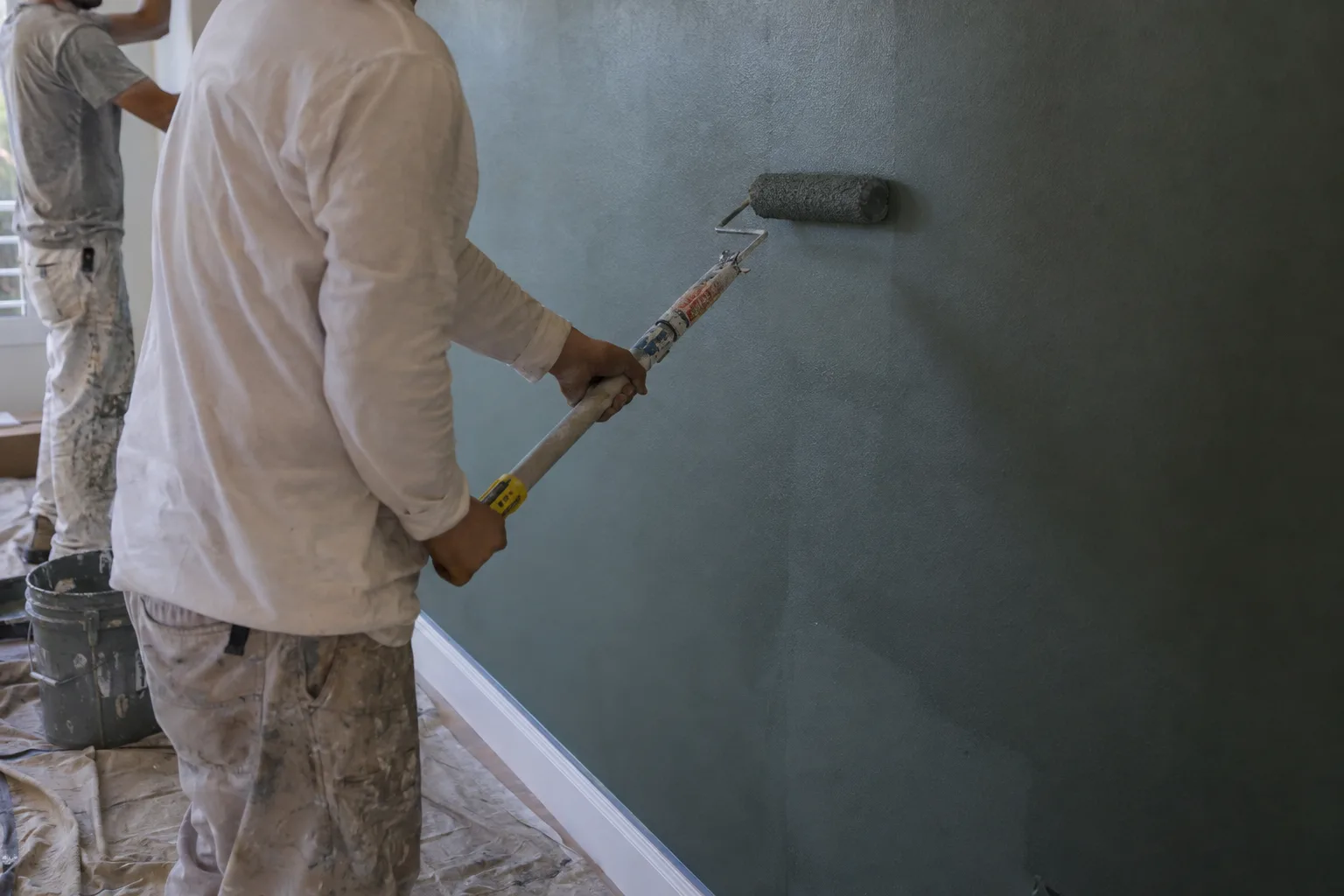
What Painting and Finishing Actually Covers at This Stage
Painting and finishing is the coordinated final phase that turns a completed construction project into a finished home.
It's not just applying color to walls. Interior painting and finishing - the full sequence of surface prep, priming, color coats, trim work, and final touch-ups - closes out every room before occupancy. At SNA Remodeling Hollywood, this phase covers fresh drywall surfaces, millwork, feature walls, and every detail that makes a space feel complete. It runs parallel to punch-out, not after it. The result is a home that looks exactly the way it was planned - not close, not almost.
How Los Angeles Homes Reach Us at the Finishing Phase
Los Angeles construction projects almost always end at the finishing stage - and the building stock here makes that stage complex.
Homes across the 90046, West Hollywood, and Silver Lake areas carry a mix of older plaster walls, newer drywall additions, and original millwork that requires different surface treatments in the same room. A 1940s Spanish Colonial in the Martel Ave corridor - close to our dispatch location - can have three different substrates in one hallway. Each one takes color differently.
Here's what most homeowners don't realize about finish painting in Los Angeles: light exposure varies dramatically by orientation and window placement. A color that reads warm on the north wall reads completely different on the south-facing wall by afternoon. We account for that during color layout, not after the first coat dries.
We dispatch from 1433 N Martel Ave in Los Angeles. Finishing crews reach projects in Culver City, Beverly Hills, Studio City, and surrounding neighborhoods without extended staging delays between construction and final-phase work.
A Call We Often Get When Construction Has Just Wrapped
The finishing phase goes better when the finishing crew knows what was built.
I'm Liam Harris, founder of SNA Remodeling Hollywood. A situation we encounter often: a homeowner's remodel is structurally done - new kitchen layout, fresh drywall throughout, updated trim profiles - and they're working to get the space painted before move-in.
The challenge isn't the painting itself. It's sequencing. Fresh drywall needs to be primed differently than existing walls, especially in Los Angeles where mild coastal humidity can affect how primer bonds on west-facing rooms. Apply finish paint too soon after mud dries, and the surface telegraphs every seam under raking light.
In those situations, the first thing we do is walk every surface. We're looking at where new drywall meets original plaster, how the trim profiles were installed, and where cut lines will land on architectural features. Then we build the finishing sequence around that - not around a standard timeline. Surface preparation comes first. Priming follows. Color coats go on only when the substrate is ready.
When the painting crew has context for how the space was built, nothing gets skipped. They know where the problem spots are before they start. They know what the homeowner is expecting when they walk back in. That knowledge is the difference between a clean final result and a project that needs a second visit to correct.
Here's How We Make Sure Nothing Gets Left Unfinished
Every room gets a closing review before we call the finishing phase complete.
A common question at this stage: "What if something gets missed?" Final punch-out painting - the last-pass corrections across all finished surfaces - is built into how we close out every project. It's not a separate request. It's the last step in the sequence.
We move room by room. Touch-up painting - small corrections, cut-line refinements, areas affected by hardware installation - gets addressed as a final sweep before the project is signed off. Color consistency, meaning uniform color tone and sheen across adjacent rooms under changing natural light, is verified at that stage too. Nothing is considered done until the walkthrough is complete.
The Order We Follow From Surface Prep to Final Coat
Surface preparation - cleaning, patching, sanding, and priming - is what makes the final coat last.
Every finishing-phase project at SNA Remodeling Hollywood follows a defined quality sequence:
- Substrate assessmentwe identify every surface type before selecting primer or finish product
- Patching and sandingall drywall seams, nail holes, and joint compound areas are brought to a flat finish
- Primingappropriate primer selected by surface type; fresh drywall, plaster, and bare wood each get different treatment
- Trim and millwork prepbaseboards, door casings, and crown molding are prepped separately from wall surfaces
- Color applicationtwo coats minimum on walls; additional coats where color depth requires it
- Feature wall finishingaccent walls and architectural surfaces receive dedicated attention, not the same pass as adjacent walls
- Touch-up and close-outfinal review, corrections, and confirmation that color consistency holds room to room
Three coats on a feature wall. Not two. That's the standard we hold for surfaces where the color is meant to read deep.
Room by Room: Trim, Color, and Detail - Done in Sequence
Interior finish painting and finishing work is sequenced by room stage, not by trade convenience.
Diagnostics
We walk the full project before paint goes on. Every surface gets assessed - new drywall versus original plaster, trim profiles, ceiling height, and window placement relative to light direction. In Los Angeles homes, especially in hillside neighborhoods where window exposure is maximized, light assessment before color layout prevents mismatched results at the end.
Implementation
Rooms are worked in order. Ceilings go first, then walls, then trim and millwork. Trim and millwork finishing - painting baseboards, door casings, and crown molding to the specified sheen - is always the last brush on the wall surfaces. Cutting in at trim lines, not taping and peeling, is standard on detailed millwork profiles.
Feature walls are treated as their own substep. Accent wall application is built into the room schedule, not added as an afterthought. Color is confirmed under both artificial and natural light before the second coat goes on.
Post-Service Testing
After completion, every room gets a review pass under direct and raking light - raking light reveals surface imperfections invisible under flat illumination. Touch-up painting addresses anything identified in that pass. Color consistency across rooms is checked last, confirming that the same color reads the same way in adjacent spaces. Only then is the finishing phase closed out.
Neighborhoods and Cities Where We Handle Final-Phase Work
SNA Remodeling Hollywood serves finishing-phase projects across the Greater Los Angeles Area.
We complete interior painting and finishing work in Los Angeles, West Hollywood, Hollywood, Silver Lake, Culver City, Beverly Hills, Santa Monica, Burbank, Glendale, Studio City, Sherman Oaks, Pasadena, and surrounding areas. Whether your project is a single room or a full-house remodel, our crews reach you without extended delays from our Los Angeles dispatch location.
Ready to Schedule the Finishing Phase of Your Project?
If construction is wrapping and you need the finishing phase handled cleanly, reach out now.
SNA Remodeling Hollywood manages interior painting and finishing as part of a complete interior remodeling scope. Call us at +1 323-761-0179 or email info@snaremodeling.com to describe where your project stands. We'll confirm availability and talk through what the finishing sequence looks like for your specific space.