What Makes a Floor Last in Los Angeles Homes
A floor's lifespan is decided before a single plank goes down.
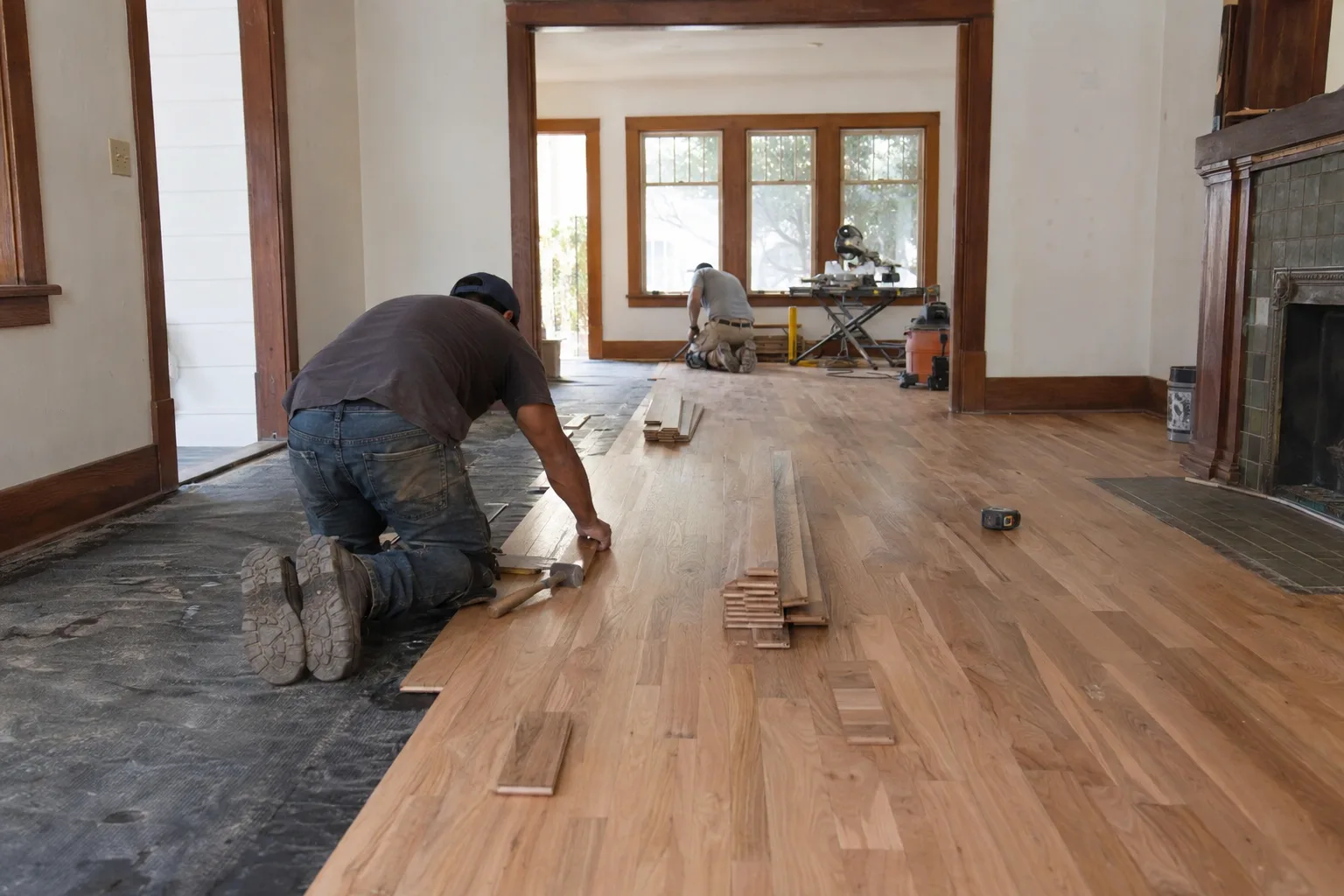
Floor installation - meaning the full process from subfloor preparation (the leveling, patching, and fastening work done before surface material is laid) through finished surface - is a structural task. The material you choose matters. But the surface it sits on matters more.
Los Angeles homes present a wide range of subfloor conditions. Wood-frame craftsman bungalows, mid-century slabs, and converted loft spaces each behave differently underfoot. Each one requires a different approach before installation begins.
SNA Remodeling Hollywood handles floor installation as part of a complete interior remodeling scope. That means the same crew manages demo, subfloor prep, and finished installation - in sequence, on the same site. No scheduling gap. No handoff between separate contractors. The result is a floor that holds the way it should.
Subfloors We See Across Silver Lake, Pasadena, and the Hills
Every neighborhood in Los Angeles has its own subfloor story.
Our team is based at 1433 N Martel Ave in Los Angeles, 90046 - sitting right between Silver Lake and West Hollywood. That location puts us within reach of nearly every housing type in the greater LA area.
Here's what that looks like in practice. In Pasadena, we regularly work in craftsman bungalows - a common Los Angeles residential style with wood-frame construction and original subfloor systems. Some of those subfloors are 80 to 100 years old. Joists may have shifted. Soft spots develop. Surface boards loosen.
In the San Fernando Valley and across Culver City, slab foundations are the norm. Slab subfloors can hold moisture that migrates upward over time. That upward moisture migration can buckle laminate flooring - a synthetic surface product requiring stable, dry subfloor conditions - within a single season if no moisture barrier is in place. A moisture barrier is a membrane or treatment applied to slab subfloors specifically to block that migration.
Hillside properties in the Hollywood Hills add slope and differential settling to the equation. Each of these conditions shapes the prep work before anything decorative gets installed.
A Call We Often Get: New Floors That Didn't Last the Year
The most common flooring complaint we hear isn't about the material - it's about what was under it.
I'm Liam Harris, founder of SNA Remodeling Hollywood. A situation we see often goes like this: a homeowner finishes a remodel and has hardwood flooring - solid or engineered wood planks installed as a finished floor surface - laid as a final step. The installer comes in, puts the material down, and leaves. Six months later, the homeowner calls us.
The planks near the kitchen threshold are lifting. There's a soft give underfoot near the bathroom door. A squeak has developed on the landing.
None of those problems started with the hardwood. They started with the subfloor underneath it.
What typically happened: the subfloor wasn't assessed before installation. There was an existing soft spot that wasn't addressed. The slab had moisture present, but no moisture barrier went down first. Or the subfloor was slightly unlevel - just enough that the flooring material, under foot traffic and seasonal temperature shifts, began to move.
Los Angeles temperatures don't swing dramatically, but the marine layer along the coast and the interior heat of the Valley create enough expansion and contraction cycles to expose any weak prep work.
When our team prepares for a floor installation, we look at the subfloor first. Every time. We check for levelness, soft areas, moisture presence, and fastening condition. That assessment shapes every decision that follows - including which materials will perform well in that specific space.
The floor you see is only as good as the surface you can't.
You Chose the Material - We Handle Everything Beneath It
Your material choice is the finish line - the prep work is the race.
Here's what most homeowners don't realize about floor installation: the decision that most affects longevity happens before you ever pick a product. It happens when someone gets down and actually checks the subfloor.
We take that part seriously. Once you've chosen your material - whether that's hardwood flooring, tile installation (ceramic, porcelain, or stone tile set in mortar, requiring a rigid and level substrate), laminate, or another surface - our team builds the right foundation for it.
Some materials tolerate minor unevenness better than others. Tile installation is the least forgiving. A small dip in the substrate will crack grout lines within months under normal foot traffic. Rigid surface prep is mandatory. Hardwood flooring has its own requirements - correct fastening, proper acclimation time, and moisture-controlled conditions before planks go down.
You don't have to manage those specifications. That's our scope. You bring the vision; we bring the surface ready to hold it.
How We Assess, Prepare, and Install Every Floor
Every installation follows a fixed sequence - assessment first, materials second.
Our standards for floor installation in Los Angeles reflect the range of subfloor conditions we encounter across the region.
- Subfloor assessment before any material order is confirmed.Levelness, moisture, fastening integrity, and existing damage are checked as the first step.
- Moisture barrier application on all slab subfloors.Not optional. Not an add-on. Moisture migration from concrete is a known issue across Los Angeles - especially in older slab homes and partially below-grade spaces.
- Leveling compound where subfloor dips exceed install tolerances.Tile installation requires tighter tolerances than hardwood flooring. We match the prep to the material.
- Full fastening review on wood-frame subfloors.Loose boards and soft spots are secured or patched before anything goes over them.
- Material acclimation where required.Hardwood flooring is staged in the room before installation. This is a real step, not a formality - it prevents expansion gaps after install.
- Coordination with interior remodeling trades already on site.Painting, trim, and other finish work sequences around the floor - not the other way around.
The standard is simple: zero shortcuts on prep.
What Happens on Your Floor Installation Day
Installation day is the payoff - the real work happens in the days before it.
Diagnostics
Before installation begins, the subfloor gets a full condition check. We assess levelness across the entire room, check for moisture presence on slab surfaces, test fastening points on wood-frame subfloors, and identify any areas requiring patching or leveling compound. For tile installation projects, we confirm the substrate is rigid and flat within the required tolerance. This step is done on-site, not estimated remotely.
Implementation
Once the subfloor is prepared, material goes down in sequence. Hardwood flooring is fastened or floated depending on subfloor type and manufacturer recommendation. Tile installation proceeds over a properly cured mortar bed with appropriate joint spacing for the specific tile format. Laminate flooring is floated over an underlayment that accounts for minor surface variation. Transitions between rooms, thresholds, and borders are measured and cut on-site for a clean fit.
For projects running as part of a broader interior remodeling scope, flooring installation is sequenced after framing and drywall and before final paint and trim - the correct order for a clean result.
Post-Installation Check
After the surface is down, we walk the floor. Literally. Every square foot gets foot pressure applied to confirm there are no hollow spots under tile, no movement in hardwood planks, and no edge lifting on laminate. Transitions are checked for secure fastening. The room is left clean and ready for the next trade or for final inspection.
Floor Installation Across Greater Los Angeles
We install floors across the full east-to-west span of Los Angeles.
Our team serves Los Angeles, West Hollywood, Silver Lake, Hollywood, Culver City, Beverly Hills, Burbank, Glendale, Santa Monica, Studio City, Sherman Oaks, Pasadena, Encino, Torrance, and the broader San Fernando Valley. We also reach Long Beach, Inglewood, Hawthorne, and communities further east through Arcadia and Monrovia.
If your home is in the Greater Los Angeles area, call us at +1 323-761-0179.
Ready to Start With a Solid Foundation
Good floors start with one decision: who prepares the subfloor.
SNA Remodeling Hollywood handles floor installation in Los Angeles from the ground up - subfloor assessment, prep, and finished surface installation, all in one scope with one crew. Whether your project is a single room or part of a full home remodel, the process starts the same way. Contact us at +1 323-761-0179 or email info@snaremodeling.com to schedule your site assessment.